My take on Meta VR Glasses
It has been a week since the launch of the Meta VR Glasses, but the community is keeping debating about them. In particular, people are commenting about them being a good thing or a bad thing for our ecosystem and are keeping comparing them with the Apple Vision Pro. In this article, I’ll try to explain my point of view about them: I was there during the launch, I’ve spoken with plenty of people who went hands-on with them, and I tried something similar in China (the Gravity XR reference design), so I have a well-formed opinion about them. This article will be a very subjective one contributing to the public debate: I’m not here to tell you what is true, just to tell you my opinion about it. Feel free to agree and disagree with it, and tell me what you think in the comments.
The biggest critics of the VR Glasses
Let’s start talking about the “haters” of the Meta VR Glasses. My Twitter/X feed is full of people who are not very happy about the Meta VR Glasses. The majority of these people fall into two buckets: the fanboys of the Vision Pro, and the hardcore VR enthusiasts.
The Vision Pro fanboys
The Vision Pro community felt personally attacked by the launch of the Meta VR Glasses. And this happened for two reasons. The first is that Mark Zuckerberg himself “burned” the Vision Pro with a joke about its weight on the stage of Connect. The second is that most of the press reviewed the Meta VR Glasses with statements like “What the Vision Pro should have been”. The Vision Pro community is literally in love with its device, and I wouldn’t be surprised to discover that some members actually sleep hugging their device like a teddy bear. Mark Gurman knows this very well: every time he says something about the Vision Pro being abandoned, he gets flooded with a lot of bad comments, and in fact one day he went on social media saying that the Vision Pro community is one of the most “passionate” ever. If I were him, I wouldn’t sleep well at night…
So after the Meta VR Glasses were launched, many people with the Vision Pro icon next to their name started commenting on it by either criticizing Meta’s choices like the small FOV; or by stating that the Vision Pro is still superior; or by commenting that the comparison between the Vision Pro and the Meta VR Glasses is not fair because the Vision Pro is three years old.
I guess these people are mostly moved by an emotional response. I’m pretty sure if it was Meta releasing the Vision Pro and Apple releasing the Meta VR Glasses, 80% of these people would run to X saying that Apple is our saviour that has finally made VR lightweight and not weird to wear.
Anyway, are the comparisons between the Vision Pro and the Meta VR Glasses fair? A bit yes and a bit no. “Yes” because these are glasses that fall in a similar category: the Meta VR Glasses are made for media consumption and productivity, like the Vision Pro. “No” because these are two devices with very different specifications, timing, and target users. I guess the comment “What the Vision Pro should have been” from the press comes mainly because the Vision Pro was hyped so much by the usual “analysts” that we were all expecting something completely unrealistic from it: a lightweight headset with an M5 chipset, 150° FOV, natural interactions, and even an integrated microwave. And when the Vision Pro came out, we all faced the reality that Apple can’t defy physics. When Meta now released something with a form factor that looked more like what we dreamt of about the Vision Pro, then everyone started making a comparison.
The hardcore VR enthusiasts
The hardcore VR fans didn’t like the new Meta VR glasses for basically three reasons. One is Meta: let’s say it is not the most popular company in this group of people. The second is the low FOV: it kills the immersion, and it seems to look through binoculars. The third is the form factor: these are small glasses, which are probably not so stable on the head if you play some very active games. Yes, there will be a specific strap for fitness, but I guess something like the Quest is much more stable on the head.
These are people who chase the maximum of immersion. They probably have an RTX 5090, which is worth a couple of my kidneys. And have some headset that can provide the best immersion possible, as it could have been the Valve Index once and are some Pimax headsets now. They want a premium experience, and are happy to pay a premium for it. For these people, a device that sacrifices immersion is heretical and should burn in hell.
That’s why I read many posts saying that the Meta VR Glasses are the wrong direction, and we should all return to work instead on the Oculus Rift 2. Most of these comments are not driven by fanboyism, but more by the desire to have the best experience possible. The Meta VR glasses are clearly a compromise, and this sounds unacceptable.
Things are engineered for a purpose

At the end of the day, fanboyisms apart, the main critics of a device come, as usual, from the people that are not the target users for it.
The truth is: everyone compromises on something. When you have to build a product, you have to decide who it is for and what to prioritize so as to reach your goals. You can’t have it all, so you have to decide what to prioritize and what to sacrifice, especially in a cutting-edge technology like VR, where the technology is still unripe. The problem is that the features you sacrifice will make your headset less interesting for some people.
For instance, Apple chose to prioritize graphical quality: the definition of the Vision Pro is stunning. This also happened because Apple wanted to propose the Vision Pro as a tool that could substitute your Mac or your TV. It also wanted to make a headset that looked classy. And it succeeded in both these goals. But it sacrificed other features, like comfort (the headset is heavy) and price (it is damn expensive). You can see it is only a matter of priorities by the fact that when the Vision Pro launched, Mark Zuckerberg was actually happy with what he saw, and both he and Boz commented on the launch by saying that they experimented internally with similar features too, but then they decided to go for another route. So it is not that Meta could not build a Vision Pro; it is that Meta did not want to build it, because it had other priorities. Of course, I’m talking hardware-wise; UX-wise, Meta has no idea how to build a usable interface like Apple.
The same happened for Meta with the Quest: Meta aimed at making a super user-friendly headset. You open the box, you put it on, you turn it on, and you play. Super easy-peasy. And it also wanted to make it affordable, and this led to some compromises on performance and a lot of subsidization with our data (how surprising…). But a lot of people from the hardcore VR community never agreed with this choice. While the Quest 2 was selling like hotcakes during Covid or the metaverse hype, there were still people commenting on Road To VR that the content made for Quest had sh*tty graphics and we had better return to PCVR. And to this day, there are still people telling me that VR should have stayed PC only for better quality, even if standalone proved to have more mainstream appeal.
Meta VR Glasses follow the same logic. They have been engineered to prioritize comfort and visual quality, which are the features that allow people to comfortably watch a movie on a big virtual screen. The sacrifice has been on things like the field of view (hence immersion), which makes the headset not so good for gaming. Again, some design choices made the headset good for some use cases and bad for others.
Is there a right and wrong choice? Personally, I think not. I’ve actually always been a fan of having different options. When everyone was talking about “the killer app of VR”, I wrote an editorial about the fact that we needed a “killer ecosystem” more than a killer app. And I still believe it today. And a killer ecosystem includes both hardware and software that can appeal to different types of people. We need the high-end headsets like we need the low-end headsets. We need the games for kids like Gorilla Tag, like we need the applications for productivity of the Vision Pro. The more options we have, the better, because more people will find XR useful. We have a problem, IMHO, only when there is a high imbalance of the ecosystem. I’m, for instance, not a fan of the Quest being used mostly by kids, not because it’s not a good thing that many kids have fun in the Quest (provided that there is supervision and they only play safe experiences), but because at a certain point Meta seemed to chase only free games for kids, and stopped caring about the other types of experiences that we Millennials liked.
So, seeing things from this point of view, the Meta VR Glasses are definitely a good thing, because they are providing a new form factor that some people will like a lot. It’s another option in our ecosystem; it can’t be a bad thing. And considering the positive press it is having, it is also forcing the other companies to do their best to work on a better device of theirs. We all know that Apple disinvested in VR. But all this publicity around the Meta VR Glasses is for sure forcing people at Apple to think about how to work on a Vision device that is lighter than Meta VR Glasses. Competition is actually good for us: how the Vision Pro forced companies to improve their products (the launch of the GalaxyXR was even postponed because of that), and now the Meta VR Glasses will have a similar impact.
Meta’s mainstream attention
We also have to consider that Meta always cared only about the “mainstream”. I mean, it is a company that released the Oculus Go, which had the same VR features as a potato with two lenses and a screen, but hey, it was cheap, and they thought it could have been popular. They want the mass market; they don’t want the VR enthusiasts.
The disconnect I have (and probably many of you have) is that I’m a VR techie; my online communities are mostly other VR nerds, but Meta is aiming at the mainstream audience, and the mainstream people are a totally different kind of people. We kinda live in our echo chamber. But the outside world is different. I still remember when I made my family try the Oculus Rift back in the day. I was excited, showing them demos and describing the emotions they should feel, and then I got answers like “I see the pixels, I don’t like it” (the pixels were the screen door effect). They were not as excited as me. And don’t get me started on the looks my friends give me when I tell them that one day we will probably all wear AR glasses and live in a fully mixed reality. If I write this on social media, probably my other fellow VR fans will give me a lot of likes; but if I say it during a dinner with my (non-techie) friends, this is how I look to them:

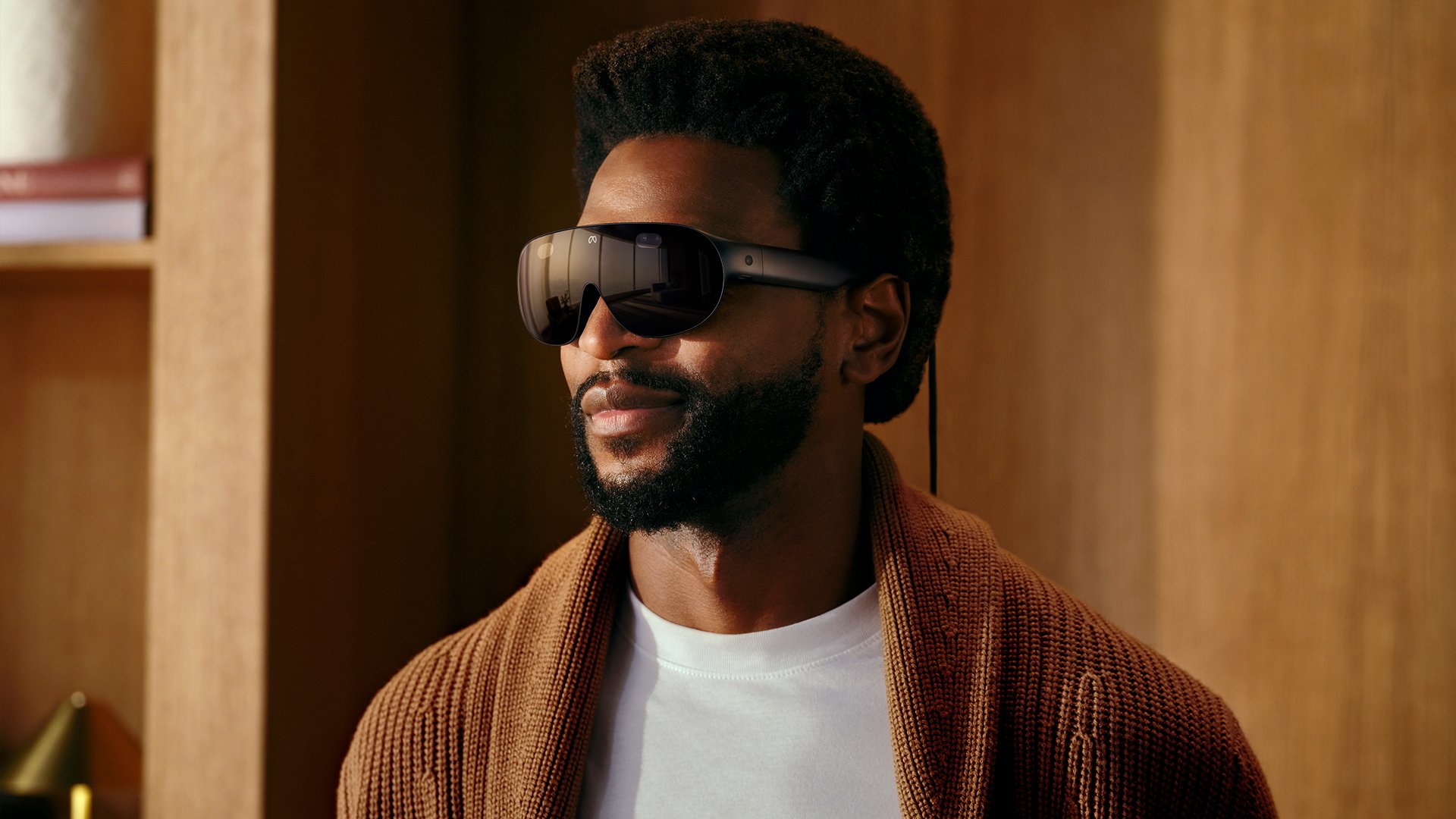
When I showed some friends the picture of the Meta VR Glasses, they told me they look cool. No one asked me about the FOV, or the resolution, or whatever other technical detail. They were surprised that VR headsets now could have a “more normal look”. This was what Meta was after: some press on online magazines showing that Meta can now make headsets that actually have a less techie look. And I guess this is also why Meta called them “VR glasses”: to tell people that these now look like glasses. It is a sort of revolution.
Meta does not care much about “VR enthusiasts”. It never did: the Quest is not a device for hardcore VR fans, the VR Glasses are not a device for hardcore VR fans, and the Ray-Ban Meta are a device that hardcore VR fans don’t even want to put in the “XR” category. Meta doesn’t care about us. Zuck said it straight years ago: he wants 1B people in XR. We, the nerds, the furries, the weirdos, the techies, are a niche. He wants to go for the mainstream audience.

The problem he has is that now there is a huge disconnect. He aims for a mainstream audience… but there is no mainstream XR audience. Actually, most XR users are the furries, the weirdos, the techies… exactly the ones he is not willing to please. And this explains to you why Horizon Worlds failed, while Resonite and VRChat thrived.
While the Meta VR Glasses will give a better image of VR to the mainstream audience, its potential buyers are still us crazy people in the VR community. And a good part of our community wanted a Quest 4 more than the Meta VR Glasses…
Who is this device for?
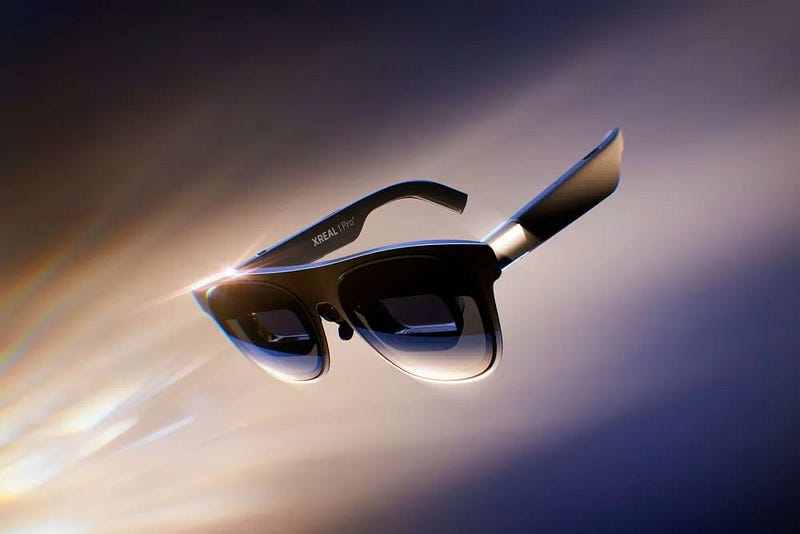
So the big question that Meta should answer is: who is the target for this device? Because people wanting a big screen already bought the Vision Pro. People wanting just to have a private screen for movies can spend much less and get some XREAL, Viture, or RayNeo glasses. People who wanted to play VR games got a Quest 3.
Maybe people who want to be productive in XR? Or maybe that “future category of users” wanting to enjoy storytelling experiences that Chris Pruett talked about in his talk at GDC?
Honestly, I don’t know. I mean, I’m pretty sure many people from our space will buy it because it is a good device. But how many of them? And how many people outside our circle of enthusiasts? Honestly, I don’t predict massive sales. I guess it will sell more or less like the Vision Pro.
I’m a super-fan of VR, but I’m not sure I’ll buy the Meta VR Glasses. I already have the Quest 3, with which I can play VR games and enjoy virtual screens. Yes, the resolution is not the same, and I don’t have eye tracking, but… what is this new device going to bring to me? Is it going to bring me business? Is it going to bring me some revolutionary experience? I’ll see what use cases Meta will be able to bring to the table. Talking about productivity, I am a work freak, so I’m all in for that. But I had discomfort wearing the RayNeo iO glasses (that weigh 33g) for many hours, so I can’t imagine wearing the Meta VR glasses (100g) all the day for work. Plus, I now have a damn DELL beast with 3 monitors (yeah, I belong to the PC master race), and I’m not going to trade it for a mobile chipset and 90° FOV. I can imagine using it to work on a plane, maybe. But is it worth $1300 + VAT? I’m not sure; that money is a month of salary in my city. If I could get it for free, I would get it for sure, but for $1300… maybe.
What I’m saying is that beyond the shiny press releases and the amazing technical features, Meta has to give us answers about why we NEED to buy this device. It should show some category of users that this is a MUST-HAVE and not a NICE TO HAVE.
The Meta VR Glasses are a good device
Even if I couldn’t try the Meta VR Glasses myself, I was there at Connect, and I spoke with lots of people who tried them. And the consensus was that it is a great device. I have spoken with literally no one saying that it was shit. Zero. Ok, the demos were scripted, and we need to see how the final product will be. But at the current stage, it is a very good headset.
And having tried the Gravity XR in China myself, I can confirm to you that lightweight VR glasses are amazing. They are light, they are comfortable, and they don’t look weird on the face. They solve one of the biggest problems of VR. They are impressive.
In our community, we have been speaking for so much time about the problems that prevent XR from becoming mainstream, and comfort was always one on top of the top issues. And now we are finally nailing it. Meta is releasing the VR Glasses, and DPVR and Play For Dream are doing the same next year. URXR already had a successful Kickstarter campaign. We are going to have a bunch of devices that are finally very lightweight and usable. It’s a great thing. And we should all be happy about it, instead of criticizing it.
Like, I would have found it weird to put a Quest 2 on a bus to watch a movie. I wouldn’t find it weird to wear DPVR glasses or Meta VR Glasses. It helps a lot with social acceptance. And it can also be interesting to increase the time in VR: wearing a Quest or a Vision Pro to work for more than one hour straight is a big no for me, but with these glasses, I’m pretty sure I could go longer. It’s still too much weight for 8 hours a day, but for sure I can have longer sessions.
For the use cases that Meta envisioned, like watching media, productivity, communication (Hologram calls), and casual gaming, I think Meta VR Glasses could be a solid device.
But they are not a good device for everything
As I’ve said, a product is about making choices. And Meta clearly prioritized the form factor here at the expense of immersion. The FOV in these glasses is pretty limited, and everyone mentioned it at Connect. Some people told me they can’t imagine playing VR games with it, and others also said that they can’t be good for 360 movies either.
It’s not a device for gamers, and Meta knows it: rumors talk about a separate Quest 4 in the works. It is not a device for people who want the best immersion possible: it is not a leader in terms of FOV or resolution.
Plus, the cable is a big compromise. I’m still not sure I’m a fan of headsets with the split compute form factor.
These “all-in-two” devices can be very lightweight, but also require you to put a brick into your pocket. I personally find it annoying. Last time I had to try a demo with the Vision Pro, the guy was a bit unhappy to see I had all my pockets full of stuff. When I tried the XREAL Aura, I found the computational puck pretty heavy to carry around. It’s good to have less weight on my head, but I’m annoyed to have now two devices to care about, plus a cable that goes around somewhere. I still haven’t had enough time with one of these products to tell you my final opinion about it, but I find the computational puck a design compromise on its own. Personally, I’m a fan of all-in-ones, and Snap made a very brave bet on this sense… but they had to compromise on many other things because of this… and they got mocked by the community a lot for it.
This was to say that Meta VR Glasses are not a perfect headset by any means. They are not ideal for any context where maximum immersion is needed. To me, they are more like a device to be used when you are sitting at a desk.
In general, it is good for the ecosystem
As I’ve said, my dream is to have a “killer ecosystem” for XR, and the Meta VR Glasses are very positive in this sense. They promise to be a good device with new features. And they are offering an interesting alternative to what is available in the market today. And as I’ve said, this is what I think we need: more options for more types of people. We need headsets for enthusiasts, headsets for professionals, headsets for gamers, and headsets for kids.
Also, they had good press, and we need good press for XR. The more the generalist press talks well about VR, the more there is interest in the ecosystem, and the more there are investors and customers.
Sure, at $1,300, they for sure won’t have stellar sales. It can’t. In these 12 years, I’ve seen how much price is super important to determine how many sales a headset will have. But if it manages to sell more or less like the Vision Pro, I think we still can consider it a success. My only fear is that the press will do the same as the Vision Pro, unrealistically expecting millions of sales and then saying “VR is dead” when it didn’t happen.
Personally, I’m glad to see this device, and I’m curious to see what new opportunities will unlock. Let’s see what the reactions of the market will be… because that is kinda unpredictable. It’s also good that Meta released a new device, because some people were afraid it abandoned the ecosystem. And it is also good that it put “VR” clearly in the name, after years of bullshit about “spatial” and “MR”.
And of course I’m also happy about all the other devices that are coming and that are bringing other options, like XREAL Aura, Snap SPECS, the Steam Frame. As I’ve said, the more, the better. I would love to have every year a period like this fall where many new XR devices are coming. And you?
(Header image by Meta)
Disclaimer: this blog contains advertisement and affiliate links to sustain itself. If you click on an affiliate link, I'll be very happy because I'll earn a small commission on your purchase. You can find my boring full disclosure here.