Discover Latin America’s XR ecosystem with Oscar Cartagena
In my career as an XR professional, I’ve got to know people from all over the world, especially thanks to this blog, social media, and the international events I attended. This has let me expand a lot my horizons, and understand that often, without noticing, we focus on only one part of the world, the one that is closer to us. But there are many others, with different problems, markets, and talents, we know little about.
One of these places is Latin America. We all know very well the VR ecosystem in the US, but many of us from Europe or the US have more difficulties in imagining what happens after you cross the Southern border with Mexico. For instance… do you know that there are many difficulties related to getting and using a VR headset in South America? Do you know that there are some XR blogs and magazines all in Spanish to cater to Spanish and Southern American markets?
To let me put a spotlight on the LATAM (Latin American) XR ecosystem, I interviewed the Chilean XR professional Oscar Cartagena and asked him a lot of questions about the difficulties and strengths of immersive realities in his part of the world. It’s been a very interesting chat, and I’ve learned a lot from it. So I advise you to keep reading to discover a different world.
Hello Oscar, can you introduce yourself to my readers?

Gladly. I’m Oscar Cartagena and I’m a serial entrepreneur. I live to create and create to live.
I’ve been working in technology and multimedia for the past 25 years, doing everything from graphic design, sound production and editing, music production, video, illustration, printing, coding, and everything in between. For the past 5 years I’ve been hell-bent on creating a solid XR industry in Chile by funding the first (and only) trade union association dedicated to XR technologies and immersive experiences, the Asociación Gremial Chilena de Experiencias Inmersivas (ACHEX A.G.). It is a currently around 30-company-strong association focused on XR technologies and their impact on Chilean and Latin American societies. Among many things, we collaborate with government entities, other trade union associations (in and out of Chile), academics, and scientists to figure out ways to reap more benefits than problems for our society through the use of these technologies. Last but not least, I also own an experiential marketing and creative technologies boutique agency in Santiago called Augmented Experiences.
What are some XR projects you worked on lately?
I split my time between my work as president of the association and the agency (which has three different business units), so I’ve got things going on all over the place. As president and industry leader I’ve managed quite some interesting things this past year: I managed to bring together Chilecreativo (the creative economies division for the Chilean Development Agency), the CRT+IT (a public+private initiative for tech innovation in the creative economies sector) and our association, to form an alliance with Meta and create 500 augmented reality scholarships for Chileans (which has over 1.5K applicants as of this writing).
I also led a group of 8 Chilean companies, that were awarded a government fund to create the 1st Chilean XR industry export hub, and within that initiative, we traveled to Immerse Global Network – Miami in December, to promote and lead the way for the Chilean XR exports. We also hosted a local VR DAY event, with a great public reception and interesting speakers & topics.
I could go on and on, it has been an incredible year for the association and the Chilean XR industry. As for the agency, we did some cool stuff for Lenovo Chile earlier this year: worked on a very intense motoGP simulator for Oculus and also did this awesome screen pillar with Kinect. We’re currently working on some immersive spaces for Universities and also revisiting Posterity, which was my passion project before the ACHEX came into my life.

I would like to explore with you the problem of XR headsets in Latin America. Sometimes we from Europe or the US don’t realize how is it difficult in other regions to get access to hardware. Can you tell us how is the situation there? How is it trying to buy a Quest 2 or Valve Index in Latin America?
Well, I can tell you this, Mr. Spock from Star Trek would argue that there is no problem, since there is no solution. It’s a royal pain to get hardware in Chile. I mean, besides the Oculus Quest 2, there’s hardly anything to get locally. Your best bet is Amazon and dealing with the international shipping charges. I take the liberty to mention the Quest 2 because it’s the only VR headset that you can get at a retail store and that has the SEC regulations (National Bureau of Electricity and Gas) in order to be sold legally.
I’ve been working to help international vendors soft land in Chile but it’s been a long journey and I’m hopeful that in 2023 we’ll see some solid progress in this particular area. What’s really complicated is that getting the hardware is only half the battle. To “win the war” you need to also have a certified and trained workforce that’s able to fix (and eventually upgrade) said hardware. As you can see, this makes things slower, especially because I strongly believe that none of the hardware vendors has any kind of hardware technical certification/training program available. So even if we managed to entice a big vendor to come and sell their hardware here, we would still need to send our hardware back to US/EU/ASIA to get it fixed and/or checked out. Another option would be to have that big vendor open a commercial and technical office in the country, which would then blast the implementation costs through the roof, making it less appealing and setting that ROI really far on the horizon.
I guess most of you XR professionals have to resort to getting some headsets shipped by friends from other countries. How does support work in that case?

There is no local (or regional) support. You have to send it over to the US (best-case scenario) and hope for the best. And this is a very important point because I’ve always said to vendors like HTC, Snap, or Meta, we need hardware AND hardware technicians. It’s a double combo that’s needed for this to actually work out mid-term.
Why do you think there is no interest by the hardware companies in distributing in your area?
I don’t think that there is no interest. I think that the interest is there but they lack numbers to back up their decisions and investments. One of the main issues I see in our Latin American XR industry is the lack of information regarding market information. Simple things like market size, number of headsets available or sold, some percentage or something that might tell the company that it’s the right time to invest…There is little to go about.
Now, companies could do this themselves, but these big vendors are struggling to sell in their own regions (which are becoming crowded), they don’t have the time nor the local contacts to fetch real and useful information so they just sit and wait until someone does the heavy lifting or another company is the first one. The issue with “blue ocean strategies” is that any savvy businessman will always advise against being “the first one”, and Latin America is a huge blue ocean regarding this type of hardware. I can’t help but wonder why there isn’t anyone (that I’ve heard of) working on a Latin American pancake optic cardboard solution, or something along the lines of accessibility in a region that’s full of smartphones, decent connectivity, and lacking specialized hardware *hint*.
Could eventually governments help by supporting XR companies and enticing brands like Meta to ship to Latin America?

Indeed I believe so. Chile has many different programs that could be beneficial to any vendors that are willing to put the work in to come and sell. We’ve also spoken about creating some sort of soft landing program to help these companies with local certifications, company creation, taxes, and all possible help we could provide from a private and public perspective. I think that governments in Latin America are interested but they face bigger issues. When faced with the decision between getting a Quest 2 or going to the supermarket to get food, you might say that priorities get in the way. Bottomline I see lots of interest and yearning for this industry to really take off, but only a few are willing to really “put their money where their mouth is”.
What are the difficulties for an XR company there? Is it more complicated to survive than for companies in the West?
I think that there are many things working against us in the current state of the industry in Chile. First off, we are a very young and largely-unknown industry, so the possible benefits for different business verticals are still dodgy – this requires time and educational efforts with stakeholders to get to an even ground and discuss real work. Second, since the industry’s booming at the moment, there are a lot of “snake oil vendors” roaming around and selling ideas or concepts that end up being nothing but empty promises. This is obviously a global phenomenon but still detrimental to the industry, especially in an inherently nascent one like ours. Third, access to world-scale budgets. Our local budgets are very limited and small in comparison to rest-of-the-world budgets (about 1/3rd if we are optimistic about it), this is why exporting XR goods and services is crucial to the improvement of our industry (and salaries!).
What do you think Latin America needs to have a better XR ecosystem?
Organization, actionable data, trade union associations, and public-private joint ventures to promote and push new initiatives at a pace that makes more sense than the “government machine”. The thing about governments is that they are SLOW and it’s hard to not be constantly reacting to technological shifts instead of having a well-defined, lean, and flexible course of action.
Countries in Latin America need to be organized and build their own formal trade associations, gain traction, and push their local governments into developing government-backed initiatives for their industry. I’d say that at the very least, they should invest in generating reports and studies that validate either the industry as a whole or specific business verticals. This way, foreign companies will have data to work with and be able to make data-assisted decisions for their investments and marketing/sales efforts in that particular country, while helping the rest of the region have actionable data.
What are the most interesting companies from there?
There’s a lot going on over here! In Chile we have some great examples of quality work in companies like PleIQ, YOY Simulators, Posterity, Minverso, Almagico VR, InvadeLab, VICO Science, and many others. In Latin America there’s too many to mention, every country has their own specialty and some companies thrive in the international market with award-winning content/experiences like “The Line” from R. Laganaro in Brazil and “4 feet high” from D. Turkieh in Argentina.
Are there enough VR-related websites in Spanish? I know about Real O Virtual, for instance…

There aren’t that many, and to be honest, I seldom read in Spanish, but I do know some other hot spots for Spanish information regarding the industry. There’s Emilio’s blog called Emiliusvgs, he has done a lot for the Latin American XR community as he’s been creating content (reviews, tutorials, news) for a long time. There’s also Alehandoro from Spain, which I haven’t spoken to, but he’s got a lot of content as well. As you mentioned there’s Real o Virtual (with whom I had the pleasure of collaborating with for almost a year doing XR news from Latam), even though they are very focused on VR they do great work reviewing hardware and software. There are other smaller experience outlets out there, but I’d say those are the ones with more exposure.
And what are the communities to be involved in?

The “XR Latam” Whatsapp group I’d say is the largest and most active community at the moment. This group is run by multiple Latin American leaders and gathers different XR professionals and enthusiasts. Another group that I personally like is the “Meta Spark – Español” group. It’s very active and they share loads of information. I personally like this group because they collaborate often and help each other freely. Last but not least, there is the ACHEX community.
How is the”metaverse” perceived in your country?
It’s a love-hate relationship. On one end there are huge amounts of hype and there are metaverse initiatives popping up left and right. On the other end, there’s a lot of fear and concern regarding immersive technologies and their effects on society, from an academic, political, and social angle. I believe this is largely fueled in some cases by misinformation and/or straight-up lack of information.
Understanding the “metaverse” or immersive technologies as a whole is a very “far out there” concept for most people and it requires a lot of imagination and knowledge or as a minimum, the understanding of many complex concepts that are abstract and hard to grasp, so I’d say fear and concern as a first reaction sounds like a very humane thing. However, in the local scene, I think that the goal of these concerns is to minimize social damage while reaping as many benefits as possible, which is a refreshing perspective that allows us (government and trade associations) to work as partners instead of ideological enemies.
Now if you go out on the streets of Santiago and the rest of Chile and ask about the Metaverse, well… you’ll get a bit of everything. I recently heard about a private study that was done in a rural area of Santiago. Kids were asked if they knew about the Metaverse, and the results are staggering, about over 90% of kids said they had never even heard the term. So, taking that into account, there’s still a long way to go regarding immersive alphabetization and workforce upskilling.
Anything else to add to this interview?
I think it’s long enough as it is Tony!
I guess I can only thank anyone that’s read this far. Let’s link up and collaborate 😀
I invite you all to connect with Oscar and discuss potential collaborations in this untapped market.
And also, if you are from some other part of the world that is usually a bit obscure for us Westerners, and you want to tell us how is your ecosystem there, feel free to reach out to me, and let’s see if we can make an interesting article about it. Let’s use VR to make all of us feel a bit closer, no matter where we are 🙂
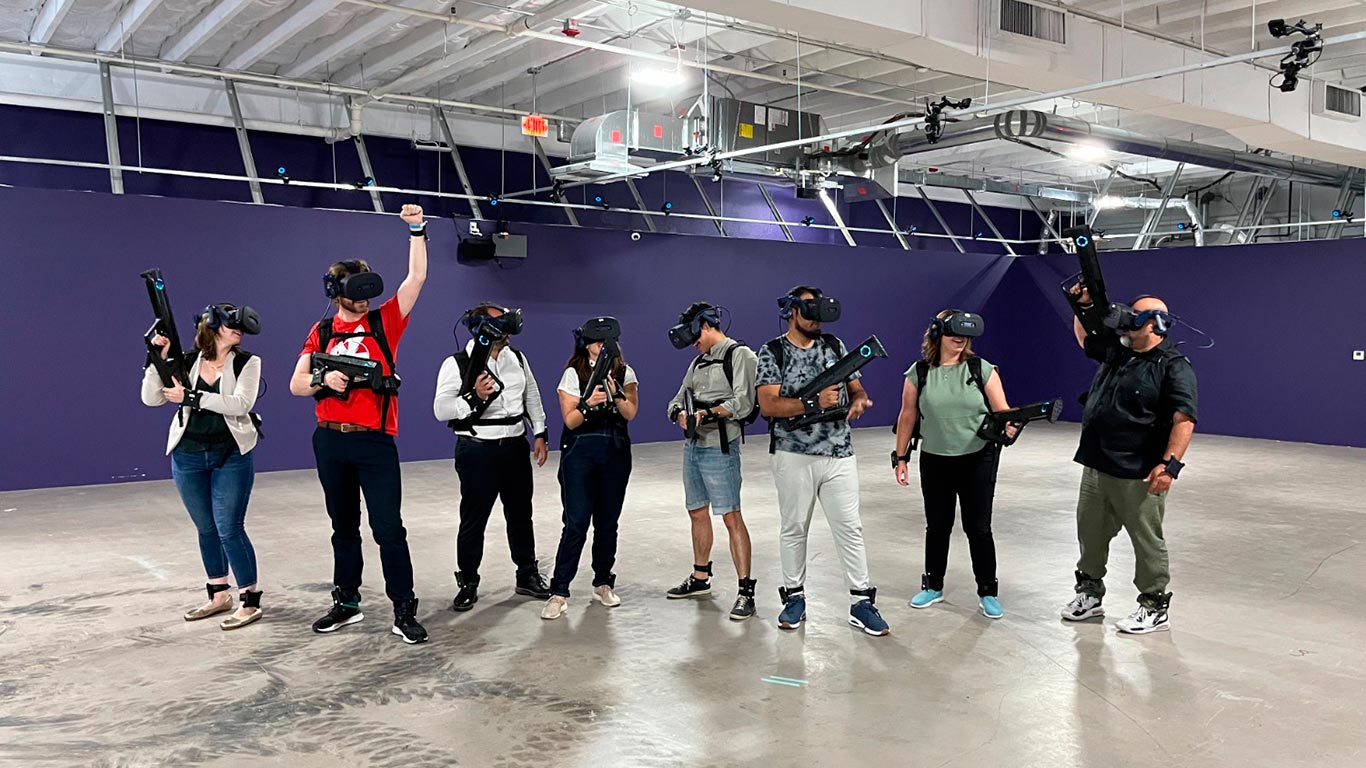
(Header image by Oscar Cartagena)
Disclaimer: this blog contains advertisement and affiliate links to sustain itself. If you click on an affiliate link, I'll be very happy because I'll earn a small commission on your purchase. You can find my boring full disclosure here.